Experienced Chesapeake Expungement and Record Sealing Lawyer
Last updated: May 4, 2026
Chesapeake is Virginia’s second-largest city by land area, a fast-growing community with a diverse economy spanning agriculture, manufacturing, retail, and healthcare. It is also a jurisdiction with its own distinct court system, local procedures for civil matters, and a Circuit Court that handles expungements differently from many neighboring cities. If you are looking to clear a criminal record in Chesapeake, understanding those local details before you file can make a significant difference in how smoothly your case proceeds.
Clean Slate Virginia focuses exclusively on expungements, record sealing, and firearm rights restoration across the Commonwealth. We serve clients throughout Chesapeake and the broader Hampton Roads region and are actively preparing for the opportunities available under Virginia’s new record sealing law, effective July 1, 2026.
Chesapeake Circuit Court: What You Need to Know Before You File
The Chesapeake Circuit Court is located at 307 Albemarle Drive, with the Civil Division handling expungement matters at Suite 300A. The Clerk’s Office is open Monday through Friday, 8:30 a.m. to 3:45 p.m. Note the early closing time: if you plan to file in person, arriving well before mid-afternoon is strongly advisable.
A few procedural details that matter from the start:
- Expungement petitions are civil filings and must be directed to the Civil Division at Suite 300A, not the criminal window.
- The Sheriff serves a copy of the petition and warrants on the Commonwealth’s Attorney. The service fee is built into the total amount collected at filing, and the Sheriff handles this step, not the petitioner directly.
- At the time of filing, you will receive a date and time-stamped copy of your petition along with a fingerprint card. You must take the fingerprint card to the Chesapeake Police Department, where fingerprints will be taken and forwarded with the petition to the Virginia State Police for a criminal history background check. Your case will not move forward until this step is completed.
- The Virginia State Police will send the criminal history and fingerprints back to the court under seal. The Clerk’s Office will then notify you by letter of the date and time of your hearing.
- Final orders are distributed by regular mail and require a self-addressed stamped envelope. Plan for the overall process to take three to six months from filing to completion.
- The daily docket is available on electronic monitors on the third and fourth floors near the escalators in the General District and Circuit Court building.
- If you need to mail documents rather than file in person, send them to: Civil Division, Circuit Court of Chesapeake, 307 Albemarle Drive, Suite 300A, Chesapeake, VA 23322. Always include your Civil Case number on any correspondence after your case is established.
How Expungement Hearings Work in Chesapeake
Civil motions in Chesapeake Circuit Court are heard on Wednesdays. This is a meaningful distinction from many other Hampton Roads courts, which schedule civil motions on Fridays. Scheduling a hearing is done through the court’s civil motions scheduling system, either online or by calling 757-382-3074.
One distinctive feature of Chesapeake’s expungement process is how the hearing itself is structured. The court’s own guidance instructs petitioners to bring their proposed Order of Expungement to the hearing. Before the order is presented to the judge for entry, both the petitioner and the Commonwealth’s Attorney must endorse it. If the Commonwealth endorses the order before the hearing, the matter may proceed more smoothly. If the Commonwealth objects, the hearing becomes contested, and the petitioner will need to present the legal and factual case for why expungement should be granted.
Upon entry of the order, the Clerk’s Office provides two certified copies. One copy is sent to the Virginia State Police, who then notify all relevant agencies to update their records. This final step takes additional time beyond the court date itself.
What Qualifies for Expungement in Chesapeake
Eligibility for expungement follows state law under Virginia Code 19.2-392.2. In Chesapeake, as across Virginia, a charge may qualify when the case resulted in an acquittal, a nolle prosequi, a dismissal (with the exception of certain deferred disposition dismissals), an absolute pardon, or a situation where your name or identification was used without your consent by another person who was arrested.
The burden the petitioner must meet depends on the nature of the charge:
- For misdemeanor charges that were dismissed or nolle prossed, a petitioner with no prior criminal record is generally entitled to expungement unless the Commonwealth can show good cause why it should be denied.
- For felony charges, the petitioner must affirmatively demonstrate that continued public access to the arrest record causes or may cause a manifest injustice, documented through concrete harm to employment, professional licensing, housing, or similar vital interests.
- Deferred disposition dismissals under statutes such as Virginia Code 18.2-251 are not eligible for expungement under current law because they are conditioned on a finding that sufficient evidence of guilt exists.
Chesapeake’s court guidance strongly recommends retaining an attorney rather than filing pro se, and for good reason. The petition must include each charge being addressed with the correct corresponding dates, certified copies of the relevant warrants or indictments and their dispositions, and a proposed order ready for endorsement at the hearing. Errors in any of these documents can delay the case or result in rejection.
Expungement vs. Record Sealing: Understanding the Difference in Chesapeake
These two tools address different situations, and knowing which one applies to your record is the first step toward the right strategy.
Expungement under current Virginia law removes eligible records from public access entirely. It is available for non-convictions: charges that were dismissed, nolle prossed, or resulted in acquittal, as well as cases involving identity theft or absolute pardons. Once a record is expunged, Virginia law prohibits employers and state agencies from asking about it, and you may lawfully deny that the arrest or charge ever occurred.
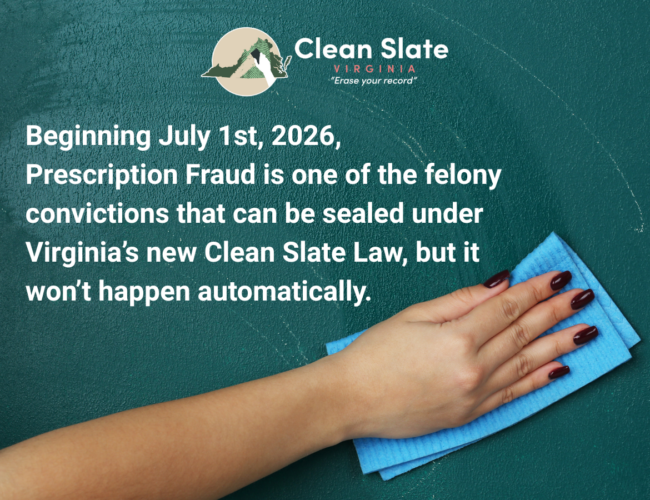
Record sealing, beginning July 1, 2026, extends meaningful relief to certain convictions for the first time in Virginia’s history. Eligible offenses include many misdemeanor convictions and certain Class 5 and Class 6 felonies, subject to mandatory waiting periods and eligibility criteria. A sealed record is not destroyed but is removed from public view and will not appear on most background checks used by employers, landlords, and licensing agencies.
Chesapeake has not yet published finalized local procedures for handling record sealing petitions under the new law. Based on how expungements are currently processed in this jurisdiction, it is reasonable to expect that the process will involve filing in the Civil Division, service on the Commonwealth’s Attorney, and, where applicable, a Wednesday civil motions hearing before a Circuit Court judge.
Why Local Knowledge Matters in Chesapeake
Chesapeake operates with procedures that differ from its neighbors in several practical ways. The Wednesday civil motions schedule, the Sheriff-handled service process, the bring-your-order-to-court requirement, and the Clerk’s Office’s early afternoon closing time are all details that affect how you prepare and when you show up. Missing any of them can mean delays, rejected filings, or a hearing that does not go as expected.
The city is served by five Circuit Court judges, and the Commonwealth’s Attorney’s Office is an active participant in the expungement process rather than a passive reviewer. Petitioners who arrive without a fully prepared, endorsed order, or without having completed the fingerprinting step, will find their case stalled.
Experienced counsel can help you navigate this process, ensure your documentation is complete, and avoid the filing mistakes that delay or derail petitions. That includes making sure the petition covers the right charges with the right dates, that certified copies are properly obtained and attached, that the proposed order is in the correct form, and that the fingerprinting step does not become a bottleneck.
Preparing Now for Virginia’s New Record Sealing Law (Effective July 1, 2026)
Clean Slate Virginia is already working with clients across Chesapeake and Hampton Roads to evaluate eligibility and build case files in advance of the July 1, 2026 effective date. The earlier you understand your options, the faster you can move when the law opens new pathways that were not available before.
Reach out now if any of the following apply to you:
- You have a prior conviction you believe may qualify for sealing once the new law takes effect
- You have a dismissed charge or an acquittal that continues to surface on background checks
- You have multiple charges from one incident or spread across different cases and are not sure where to begin
- You have outstanding restitution obligations, recently completed probation, or other factors that may affect your eligibility timeline
- You want to understand how expungement and record sealing interact and which remedy fits your situation
Speak With a Chesapeake Expungement and Record Sealing Lawyer
If you are ready to take action on clearing your record in Chesapeake, working with a lawyer who knows both Virginia law and the specific practices of the Chesapeake Circuit Court puts you in the best position to succeed.
Contact Clean Slate Virginia today to schedule a consultation and take the first step toward clearing your record in Chesapeake.